 The Hidden Problem Charities Don’t Talk About — And Why It Matters
Charities do extraordinary work.
But many organizations quietly face a discouraging reality:
People breaking into donation bins to take the best clothing before it ever reaches families in need.
Some are genuinely in need—
but many are not.
A growing number resell “vintage clothing” online for profit, turning charitable donations into personal revenue.
For a charity, the consequences are real:
lost donations
hygiene risks
lower public trust
increased operational cost
reputational damage
And when donors see someone climbing into a bin or pulling items out,
they stop donating entirely.
This is where infrastructure matters.
B2B buyers already know:
A secure collection system is not a cost—it is a preservation of your organization’s credibility.
Most people don’t realize that donated clothing may carry:
bacteria or mold
skin/respiratory pathogens
contaminants from improper storage
insects and parasites
Charities have professional sanitization processes.
Individuals who take items directly from bins do not.
This is why proper anti-theft design is not just about “property loss”.
It is about public health and operational integrity.
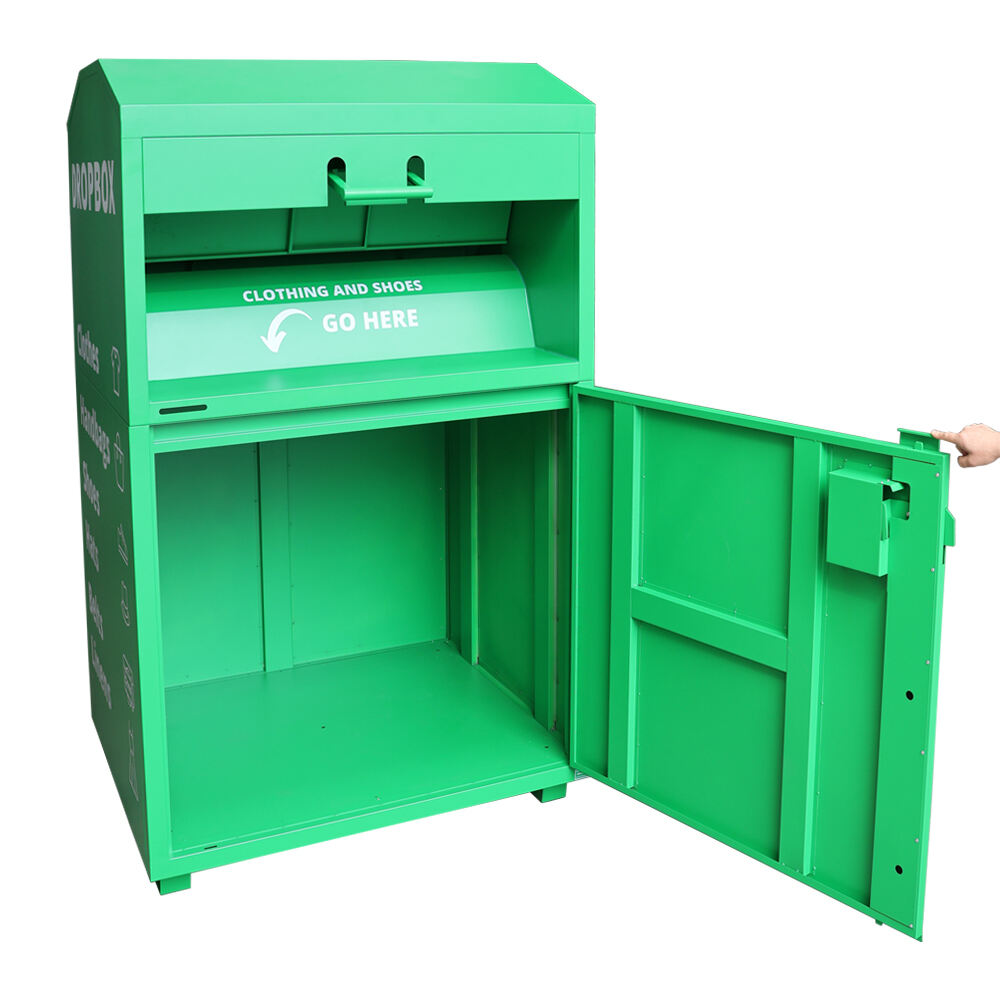
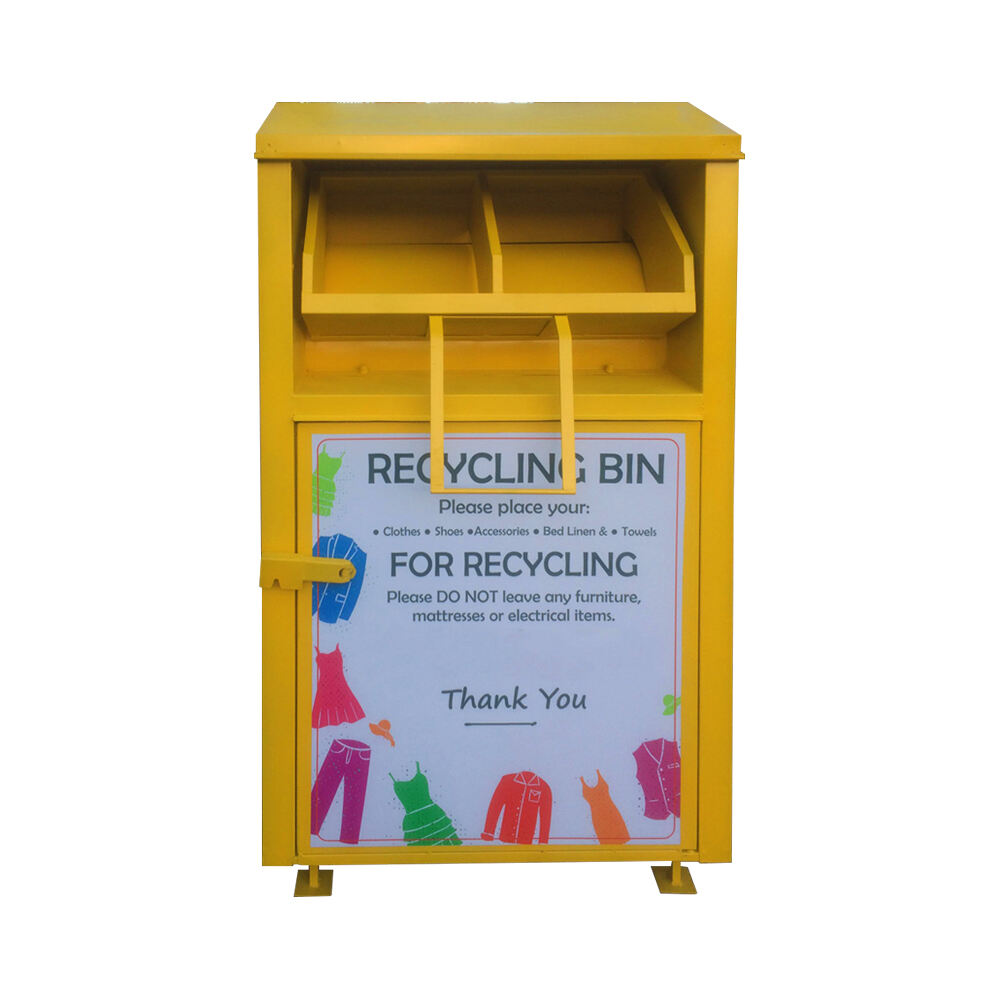
Traditional donation bins are built with:
wide gaps in the chute
soft metal sheets
exposed locks
weak hinges
minimal reinforcement
They are easy to pry open with a bar or simply by force.
Charity clients approached JDY with the same message:
“Even with a lock, people break in.
We need something stronger—something built like real security equipment.”
So JDY redesigned the modern donation bin from the inside out.
Not as a container—
but as a security system.
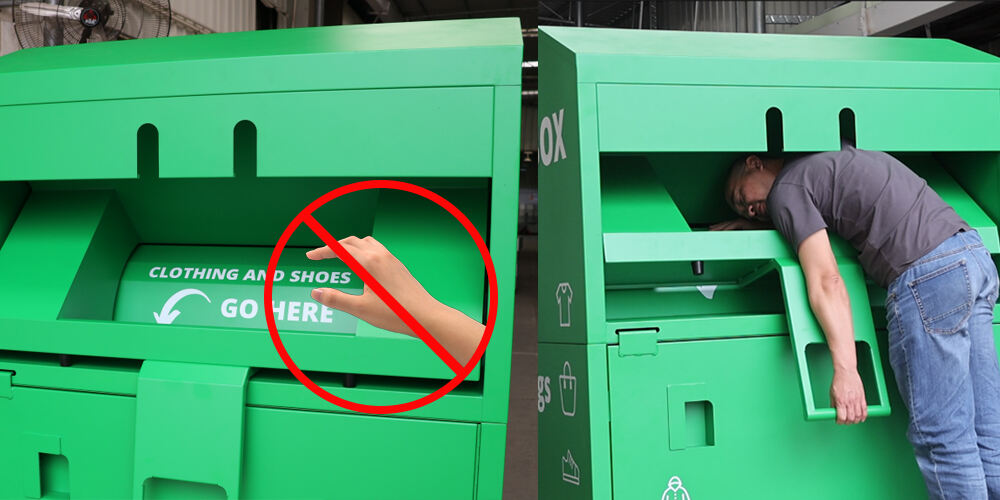
JDY engineered the chute to eliminate common access points:
Minimized gap between the chute and anti-theft plate
Reinforcement ribs welded internally to resist crowbars
Reverse-reach blocking geometry to stop arm entry
Anti-pry flanges preventing tools from sliding in
Result:
A chute that visually looks simple—
but mechanically is extremely difficult to exploit.
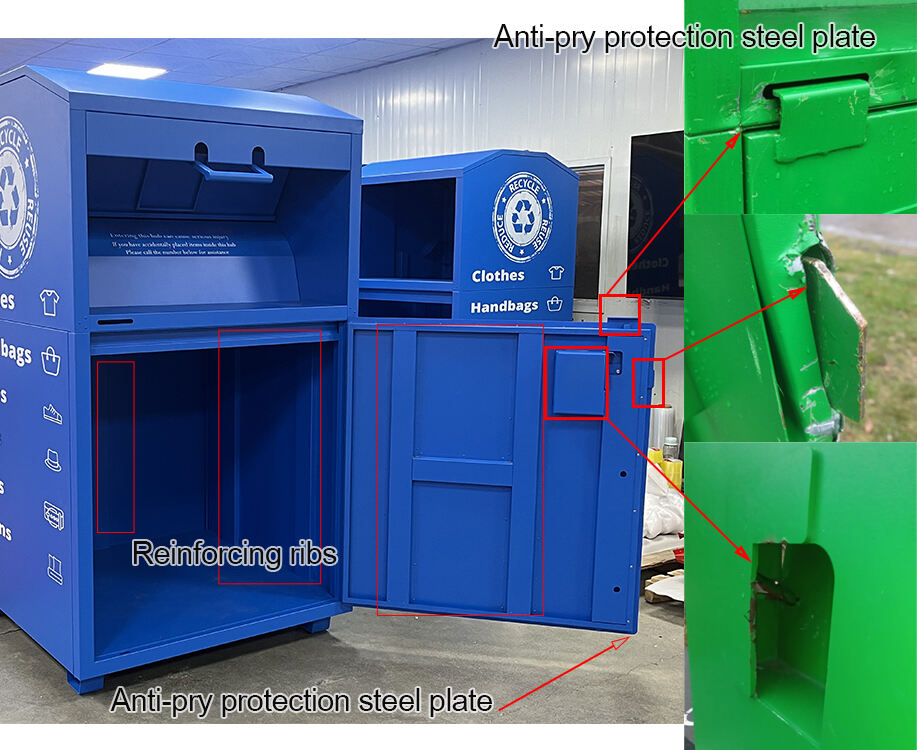
Most break-ins happen through the door.
JDY solved this with industrial-grade protection:
Stainless steel anti-pry hinges
4.0 mm thick locking bars (triple locking: top, middle, bottom)
4.0 mm anti-pry shield plate surrounding the door frame
Locks hidden behind heavy steel panels
Hidden locks eliminate the weakest link.
A pry bar simply cannot reach the locking mechanism.
During destructive testing, break-in attempts took so long that most intruders gave up—
exactly the outcome charities need.
To survive vandalism and outdoor conditions, JDY integrates:
multi-rib structural reinforcement
industrial-grade steel panels
welded impact zones
anti-corrosion coatings for long-term outdoor use
This is not a thin metal box.
It is a security enclosure built for years of abuse.
JDY understands that donation bins are more than storage:
They are a physical link between
donor intention → charity operations → families who need help.
When that chain is broken, trust is broken.
That’s why charities in Europe and North America partner with JDY:
not only for the container, but for the protection of their mission.
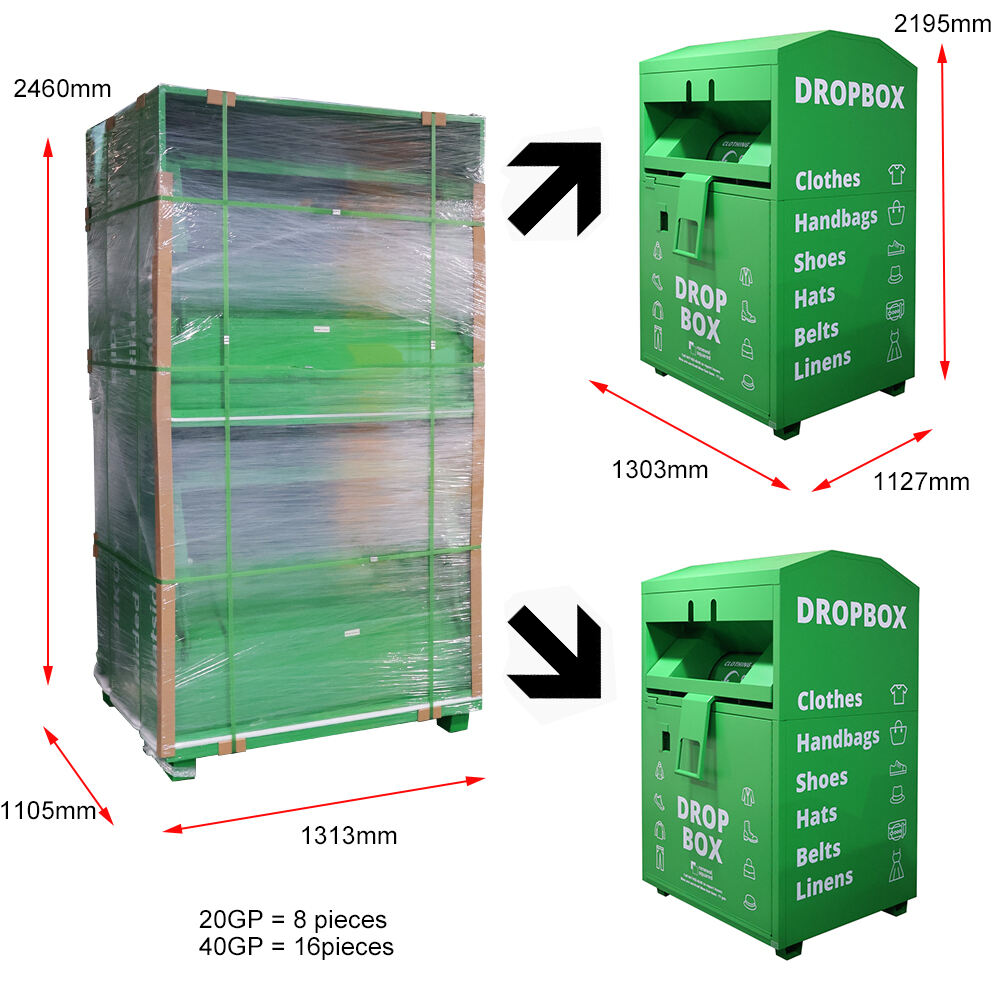
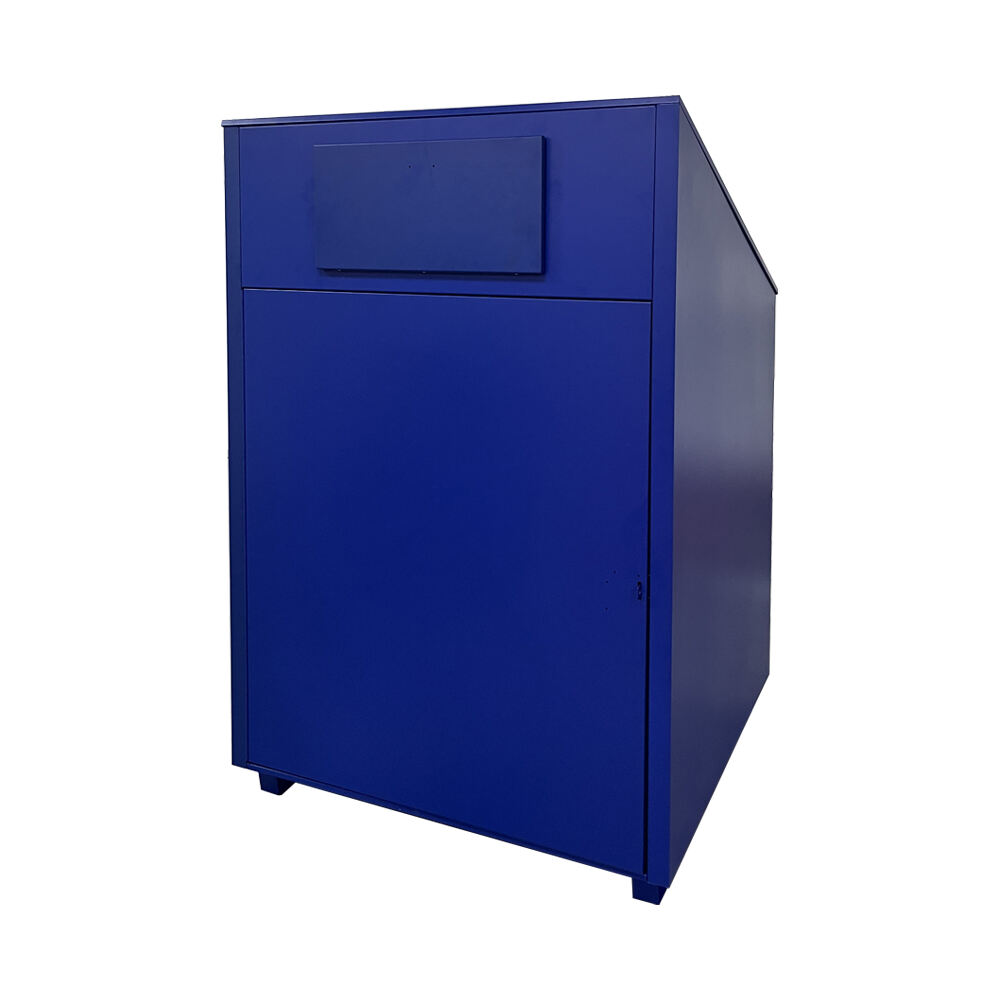
JDY’s standard model:
W1303 × D1127 × H2195 mm (1700+ liters)
One of the largest in the market.
If your program requires custom sizes, colors, branding, or locking systems,
JDY provides full OEM/ODM engineering support.
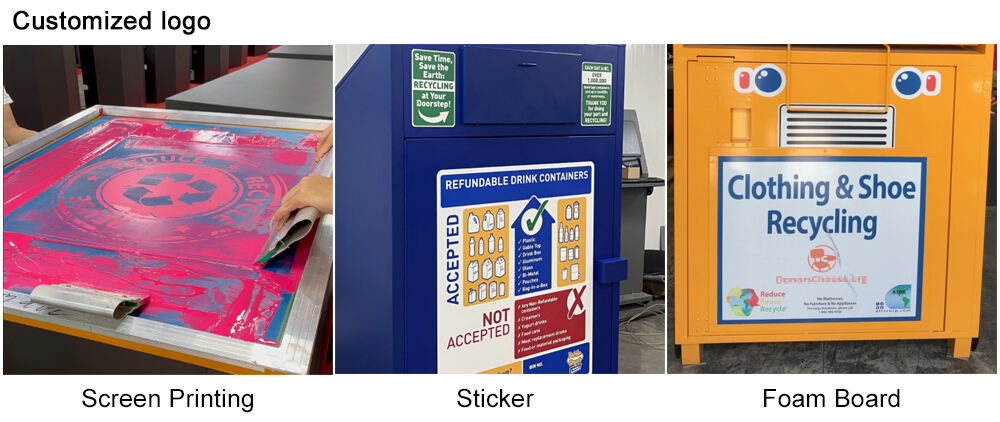
For municipalities, NGOs, charities, textile recycling companies, and donation networks,
security is not optional—it is operational stability.
Every donated garment is an act of kindness.
Every secured bin is a promise to deliver that kindness to the right hands.
JDY’s donation bins are engineered with one mission:
Stop theft.
Protect public hygiene.
Strengthen charitable impact.
If your organization is ready to upgrade to a donation system built for real-world challenges,
JDY is here to support your mission—quietly, reliably, and with integrity.
 Hot News
2025-11-10
2026-04-03
2026-03-31
2015-06-01
2025-06-07
2025-03-31

We are a leading manufacturer of parcel delivery boxes in China. With our in-house powder coating lines, our parcel boxes are guaranteed to withstand outdoor conditions for 10 years.
1st Road, DongNan Industrial Zone 2, WuYi Road, JiangHai District, Jiangmen City, Guangdong Province, China.
Copyright © JDY Hardware CO., LTD All Rights Reserved | Privacy Policy | Blog
 EN
EN